Showing posts with label Irish who served. Show all posts

Tuesday, 31 January 2012

PARDON ON WAY FOR IRISH WHO FOUGHT, SAYS SHATTER


Courtesy of Clara Hoyne....


The Irish Times - Wednesday, January 25, 2012


Paddy and Freddie Reid, who deserted from the Irish Army, were among the almost 5,000 people who joined the Allied armies

STEPHEN COLLINS, Political Editor
A PARDON for thousands of Irish soldiers who deserted from the Defence Forces to fight for the Allies in the second World War is on the way, Minister for Defence Alan Shatter has indicated.
While the Minister awaits formal advice from Attorney General Máire Whelan about how to proceed, he has said he regards the dishonourable discharge of soldiers who left to fight for the Allies as untenable.
Mr Shatter noted that for more than a decade the Irishmen who died fighting for Britain in the second World War had been commemorated in their own country.
"Many who fought in British uniforms during that war returned to Ireland. For too many years, their contribution in preserving European and Irish democracy was ignored.
"Some of those include members of our Defence Forces who left this island during that time to fight for freedom and who were subsequently dishonourably discharged from the Defence Forces," said the Minister.
He said it was now appropriate to revisit the manner in which they were treated while also remembering that those who served in the Defence Forces throughout that time performed a crucial national duty.
"It is untenable that we commemorate those who died whilst continuing to ignore the manner in which our State treated the living, in the period immediately after World War II, who returned to our State having fought for freedom and democracy," said Mr Shatter.
During that war 4,983 people deserted from the Defence Forces to join the Allied armies. Those who returned to Ireland were refused military pensions and were debarred from a range of State employment on the basis of an Emergency Powers Order passed by the Dáil in 1945.
On Monday the Northern Ireland Assembly unanimously backed the campaign for pardons for the servicemen involved.

For the full story, please follow the link below...
http://www.irishtimes.com/newspaper/frontpage/2012/0125/1224310710060.html#

Saturday, 12 November 2011


Veteran's Day 'Lest we forget' – The Irish who died in World War One

By
CATHY HAYES,
IrishCentral Staff Writer


Published Friday, November 11, 2011, 2:39 PM


Photograph taken near the front-line during WWI's Battle of the Somme

It has been calculated that 210,000 Irishmen served in the British forces during World War I, with 140,000 volunteering to fight. In all 35,000 Irishmen died.
The Irish enlisted in the war for various reasons including to fight for the justice of the cause. However, Ireland during 1914 was deeply divided between nationalist and unionist political groups and more local considerations played a role in signing up.
Among those who signed up was Tom Barry, who later became an IRA commander. He enlisted in the British army in June 1915 "to see what war was like, to get a gun, to see new countries and to feel like a grown man" according to the BBC.
For other Irishmen who signed up money was the major motive. James Connolly, the revolutionary, said Irishmen had no choice but to sign up with employment prospects so bleak in Ireland at the time.
---------------------
READ MORE:
More stories on Irish history from IrishCentral
Irish-American cheats death surfing world record wave - VIDEOS
The most Irish town in America is named
---------------------
Others such as Francis Legwidge, poet, nationalist and trade unionist, signed up in response to an unhappy love affair.
The social range of Irish soldiers amongst the ranks was clear. There was the 10th Division who landed at Suvla Bay, in Gallipoli in August 1915. They were made up of the 7th Royal Dublin Fusiliers, including "D" company, who were nicknamed "The Footballers". Among them were a lot of rugby-playing professional men and a professor of law from Dublin University.
Another battalion was made up of Dublin Dockers many of whom were followers of the radical trade unionist James Larkin. The poet Ledwidge served with this battalion. After one battle he wrote "It was a horrible and a great day. I would not have missed it for worlds."
Two other divisions served in France. Both were part of the bloody Battle of the Somme.
The 36th Ulster Division went over the top on the first day, July 1. From a total of 15,000 men they lost 5,500 over two days.
The 15th Irish Division also saw serious action in September 1916 during the Somme campaign. Up the line, in Belgium, the 16th and 36th Divisions fought side by side at the Battle of Messines. During this battle Willie the brother of Irish nationalist politician John Redmond died. Willie had signed up even though he was over 50-years-old. He wrote "I can't stand asking fellows to go and not offer myself".
---------------------
READ MORE:
More stories on Irish history from IrishCentral
Irish-American cheats death surfing world record wave - VIDEOS
The most Irish town in America is named
---------------------
John Redmond had called the war one of "Ireland's highest interest" to have a "speedy and overwhelming victory of England and the Allies". He described "a distinctively Irish army, composed of Irishmen, led by Irishmen and trained at home in Ireland".

During the war he said "the achievements of that Irish army have covered Ireland with glory before the world'.
However, due to the fact that the 1916 Easter Rising had taken place during the war, for the most part, these Irish heroes have been forgotten in history.
Tom Kettle, a nationalist politician, killed on the Somme predicted "These men [the 1916 leaders] will go down in history as heroes and martyrs; and I will go down - if I go down at all - as a bloody British officer."
Many of those Irishmen who served in the British army returned to their nationalist neighborhoods greeted with 'begrudgery' and even hostility.
In July 1919, 4,000 people attended an event at Celtic Park in Belfast. It was reported as a "notable demonstration of the part played by Belfast nationalists" in the war.
Joe Devlin, a west Belfast politician, said their fallen comrades had "died not as cowards died, but as soldiers of freedom, with their faces toward the fire, and in the belief that their life-blood was poured out in defense of liberty for the world."
Rare footage of Irish soldiers in the First World War: 


Thursday, 10 November 2011

CLARE CHATTER


ROYAL IRISH CONSTABULARY

IGP Archives have just added the RIC men who enlisted in 1842 and who were from Clare.

The names are:
BARRY, John
CUNNEEN, John
DOOLIN, Michael
HUDSON, Richard
KEOGH, Michael
LOFTUS, Edward
MALONE, John
McHUGO, Edward
MORONY, Thomas
WOODS, James

If you are interested in seeing more go to:

Click on CLARE and then Military & Constabulary

More details on site above...including other years...

 courtesy of Christina Hunt

Sunday, 23 October 2011

IRISH SOLDIERS SERVED IN AUSTRALIAN MILITARY

These are just a small sample of the records of Irish soldiers who served with the Australian Infantry. You can find lots of great information on the fantastic AIF Project site  


AUSTRALIAN ANZACS IN THE
                    GREAT WAR 1914-1918
http://www.aif.adfa.edu.au/index.html


Go to the link above and search either by conflict or go straight to Irish soldiers...


Irish-born enlistments in the AIF

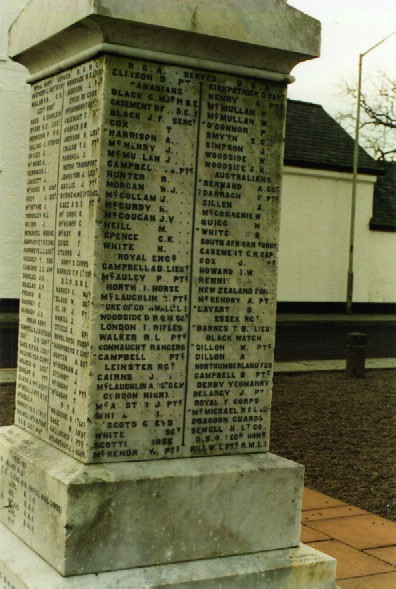
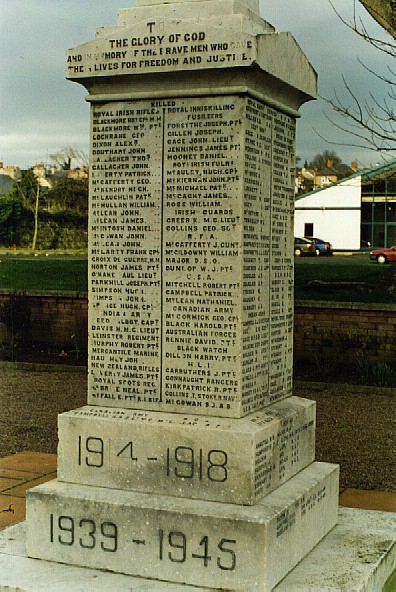
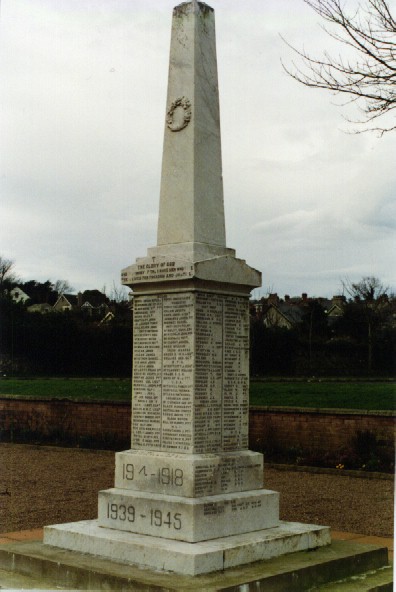
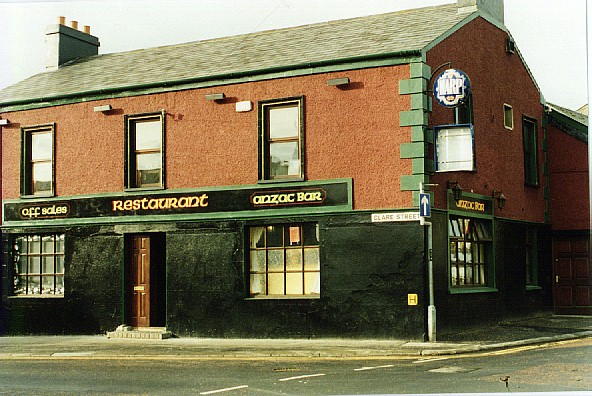
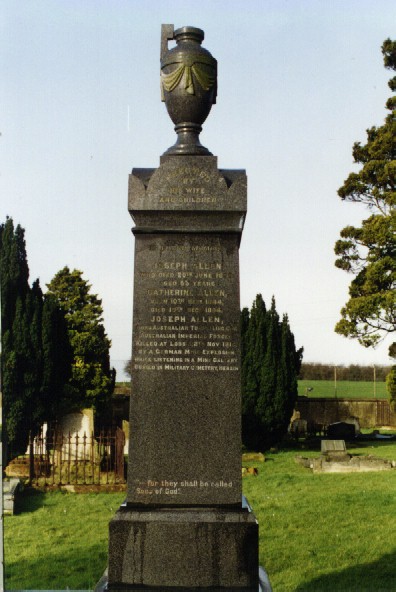
Analysis of the records suggests that approximately 3,000 men born in Ireland enlisted for service in the AIF. (An indeterminate number - probably many more - born in Australia of Irish families - also enlisted.) In Northern Ireland there are a number of local war memorials that record such enlistments, eg Ballycastle, Co. Antrim (Photos 1 2 3), where there is also the Anzac Bar (Photo), established by J DELARGY, who served with the British Army. Shankill Cemetery, Lurgan, Co. Armagh (Photos 1 2).
Service No.Name
6106Robert SCANDRETT
4224Joseph ALLEN
6047Samuel Moore HUNTER


Copyright The AIF Project, UNSW@ADFA, 2011  Reproduced by kind permission of the AIF Project.

Searching for Military Ancestors, U.K.

When looking for ' lost ' ancestors. don't forget to try searching through the various services, particularly if there has been a conflict within, say, a 10 year time frame.

Remember that people join the services for many and varied reasons, not just to protect their country. Many times, this was one way of getting fed, as simple as that, though in many times, the services were struggling to provide enough food as well. Some looked on it as an adventure, others as a means of getting away from their home situation, or to give them a 'home'... there are and were, so many reasons. 

As well as service records, the museums attached to Military, can also be a great source of information, particularly if you do have some idea of what unit, Battalion, etc. you are tracing, but while they don't hold personnel records as such, they do hold logbooks, personal items, etc.and are usually run by folk who have a passion and a great font of knowledge.

Maybe some of your lost folk may be found by tracing through some of these links....

BRITISH MILITARY


This link takes you to the National Archives, and gives you many options to search.


British Soldiers pre 1913


British Soldiers post 1913


The Long Long Trail

 I like to look for other sites, other than the obvious and direct. This has some great reading.


DocumentsOnline 

This a great service as well, free to search, but you do pay to download actual registers and various items. Sometimes the indexes will be all you need.


Veterans UK


Commonwealth War Graves


Royal Air Force Museum


Irish Soldiers in the British Army

This is just one of many sites that may help when looking for Irish in the British services.